Social media algorithms 2026 are changing how brands reach audiences online. Instead of relying mainly on followers and likes, platforms are putting more focus on content relevance, viewer behavior, meaningful interactions, and original content.
That means having a large following does not guarantee strong reach.
A smaller account can still reach new people when its content matches what users want to see.
For brands, this creates a major opportunity. Rather than trying to guess every algorithm change, marketers can focus on creating content that people actually want to watch, read, save, share, and discuss.
What Are Social Media Algorithms?
Social media algorithms are systems that decide which content users see and in what order.
Every major platform uses its own ranking system.
Instagram, TikTok, YouTube, LinkedIn, Facebook, and X all use different signals to recommend content. However, they share a common goal: showing users content that is likely to keep them interested.
As a result, the number of followers a brand has is only one part of the picture.
User behavior matters too.
If people watch a video, share a post, save useful information, or continue reading, those actions can help platforms understand that the content has value.
What Is Changing With Social Media Algorithms in 2026?

The biggest change is the growing importance of content relevance.
Platforms increasingly use recommendation systems to decide what individual users may want to see. This means your content can reach people who do not already follow your account.
For example, LinkedIn has moved toward a system that better understands what a post is about and matches it with people interested in that topic. Instagram is also putting more emphasis on recommendation and original content.
This creates a different approach to social media marketing.
Instead of asking, “How many followers will see this?”
Brands should ask:
“Who is most likely to find this useful?”
That shift can change how you plan your content.
1. Relevance Matters More Than Follower Count
Follower count still matters, but it is no longer a complete measure of reach.
A post from a smaller account can reach people outside its existing audience when the platform believes the content is relevant.
This is especially important for growing brands.
You do not need hundreds of thousands of followers before your content can attract new people.
Instead, focus on clear topics that match your target audience.
For example, a marketing agency could create a practical post about improving social media conversions.
If the content is useful and reaches the right people, it can generate attention beyond the agency’s current followers.
2. Original Content Has More Value
Platforms are also becoming more careful about repetitive and low-value content.
Instagram has taken steps against aggregator accounts that mainly repost content from other users. Meanwhile, other platforms are also placing greater emphasis on original and useful content.
For brands, the lesson is simple.
Do not build your strategy around copying what already exists.
Instead, add something useful.
Share your own experience.
Explain a problem.
Show a process.
Give an opinion.
Answer a customer question.
Even when you use trends, your brand should bring its own perspective.
3. Meaningful Engagement Matters
Not all engagement is equally useful.
A quick like shows some interest, but a share or meaningful comment can tell you much more.
For example, someone who sends a post to a friend is showing that the content has enough value to pass along.
That is why brands should create content that encourages real action.
Instead of asking people to “like this post,” give them a reason to save it, share it, or start a conversation.
For example:
Weak:
“Do you agree?”
Stronger:
“What is the biggest social media challenge your business is facing right now?”
The second question gives people something specific to discuss.
4. Watch Time Is Becoming More Important
Video platforms need to know whether people actually want to keep watching.
Therefore, watch time and completion can be important signals for video content.
A strong opening can make a major difference.
Instead of taking too long to introduce the topic, start with the value.
For example:
“Your Instagram posts may be reaching fewer people for one simple reason.”
Then explain the reason.
This gives viewers a reason to continue.
The same principle can work beyond video. Your first sentence, slide, or visual should make the value of the content clear.
5. Search and Recommendations Are Coming Together
Social platforms are also becoming places where people search for information.
Users may search for products, services, tips, reviews, restaurants, creators, and businesses directly inside social apps.
At the same time, recommendation systems can put relevant content in front of users who never searched for the brand.
This means brands need to think about both searchability and discoverability.
Use clear language in your captions.
Explain exactly what your content is about.
Use relevant keywords naturally.
Most importantly, stay consistent around the topics your brand wants to be known for.
6. AI Does Not Replace Good Content
AI can help marketers create content faster.
However, speed alone does not make content valuable.
Platforms are dealing with growing amounts of repetitive and low-quality content. YouTube, for example, has clarified its approach to repetitive and inauthentic content, while other platforms are also emphasizing original value.
Therefore, brands should use AI as a tool rather than a replacement for creativity.
AI can help with:
- Research
- Brainstorming
- Content outlines
- First drafts
- Repurposing
- Data analysis
However, the final content should still have a human point of view.
Your experience, examples, opinions, and customer knowledge are what make the content useful.
7. Create Content People Want to Share
Shareable content can help brands reach audiences beyond their followers.
Think about the content you send to friends or colleagues.
It is usually useful, funny, surprising, relatable, or informative.
Brands can apply the same idea.
Create:
- Useful checklists
- Helpful statistics
- Practical tips
- Industry insights
- Relatable experiences
- Clear explanations
- Strong opinions
- Short educational videos
The goal is not to force people to share.
Instead, create something worth sharing.
8. Stop Chasing Every Algorithm Update
Trying to follow every small platform change can become exhausting.
Algorithms will continue to change.
New features will appear.
Some formats will become more popular while others decline.
Rather than changing your entire strategy every time something moves, focus on principles that remain useful.
Create original content.
Know your audience.
Provide value.
Make your topic clear.
Encourage meaningful interaction.
Review your data.
Then improve.
This gives your brand a more stable strategy even when platforms change.
9. Measure What the Algorithm Is Doing for Your Business
Reach is useful, but it should not be the only goal.
A post can reach thousands of people and generate no business results.
Meanwhile, a smaller post may bring qualified website visitors or leads.
For that reason, look beyond views and likes.
Track:
- Reach
- Watch time
- Saves
- Shares
- Comments
- Profile visits
- Website clicks
- Leads
- Conversions
- Sales
These numbers can help you understand which content is actually moving people closer to becoming customers.
What Brands Should Do Now
The changes in social media algorithms 2026 do not mean brands need to completely rebuild their strategies.
Instead, make a few important adjustments.
First, create for a specific audience.
Know who you want to reach and what problems they need to solve.
Next, focus on original ideas.
Do not rely on reposts or generic content.
Then, make your content easy to understand.
Clear topics help both people and recommendation systems understand what your content offers.
After that, create stronger openings.
Give people a reason to keep watching or reading.
Finally, measure business results.
Do not judge your strategy only by follower growth.
The goal is not simply to get more reach.
The goal is to reach the right people and give them a reason to take action.
Final Thoughts
The biggest lesson from social media algorithms 2026 is that brands cannot rely on followers alone.
Platforms are becoming better at recommending content based on user interests and behavior. As a result, a strong post can reach people who have never interacted with your brand before.
That makes content quality more important.
Create something useful.
Make the topic clear.
Give people a reason to watch, read, save, or share.
Then use your results to improve the next piece of content.
Algorithms will continue to change. However, brands that focus on relevance, originality, and real audience value will be in a much stronger position to adapt.
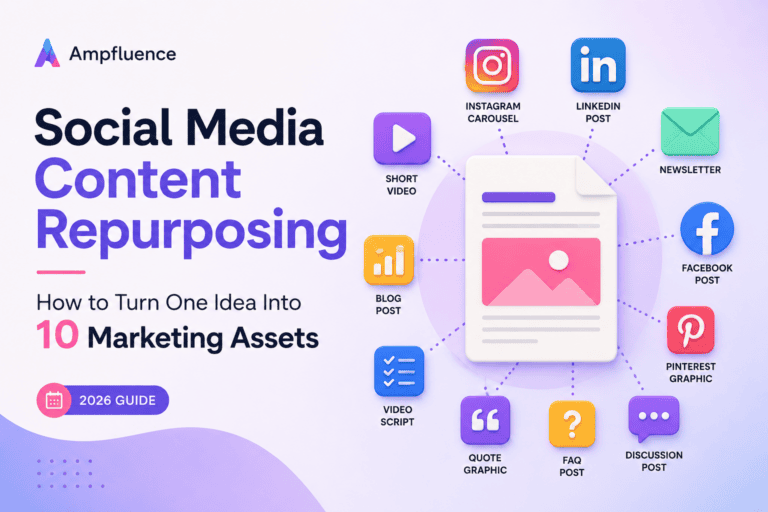
At Ampfluence, we help brands create content that doesn’t just perform once, it continues driving engagement through smart repurposing and strategic planning. Let’s turn your existing content into your greatest growth asset.