
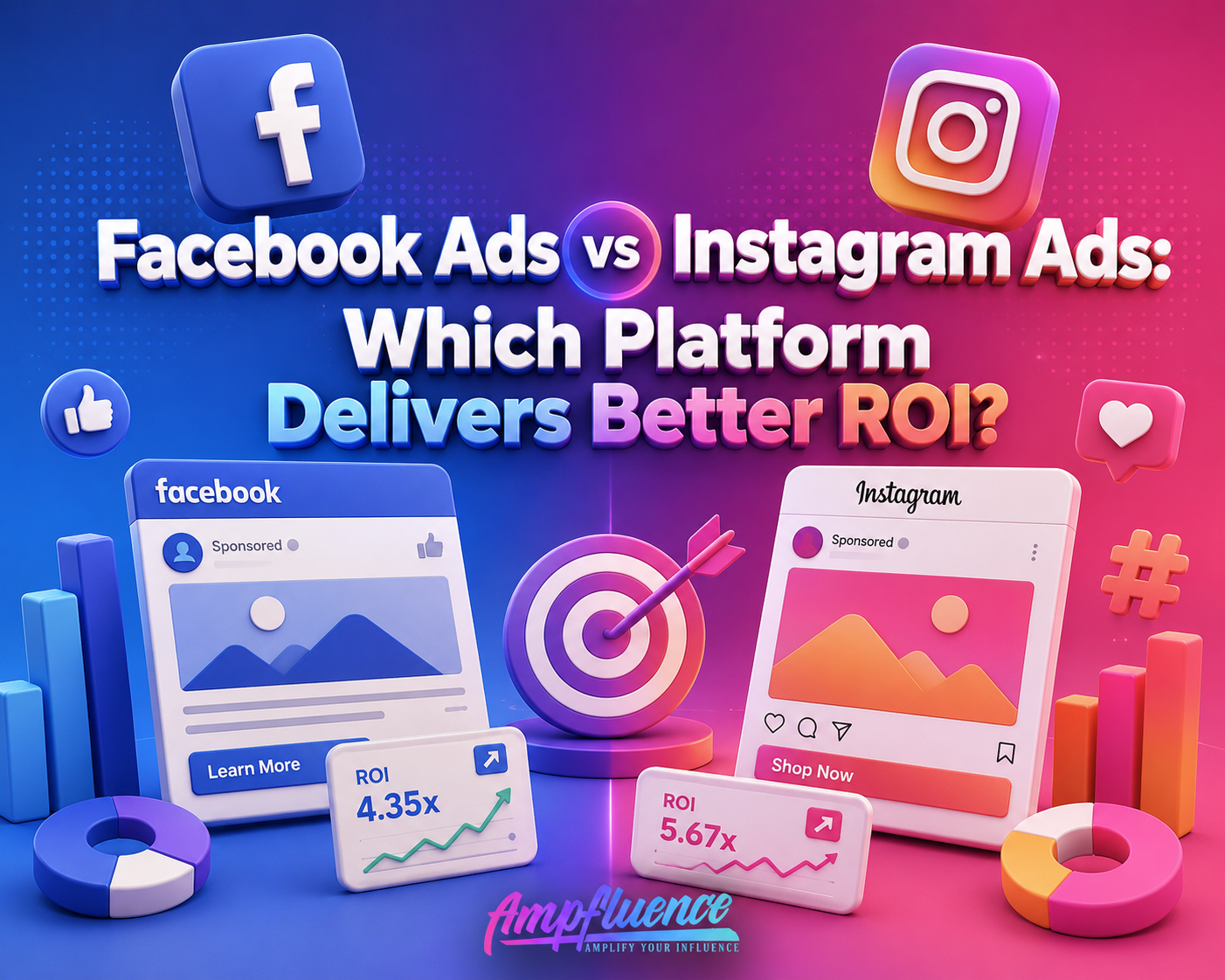
Facebook Ads vs Instagram Ads is one of the most important decisions brands face in paid social advertising today. While both platforms are part of Meta, they offer different audience behaviors, creative formats, and performance outcomes.
Understanding the differences between Facebook Ads and Instagram Ads is essential for agencies and brands looking to allocate ad spend efficiently and achieve measurable results. This guide breaks down the key factors to help you decide which platform or combination of platforms works best for your brand.
Facebook Ads vs Instagram Ads: Audience Differences

While Facebook and Instagram share overlapping audiences, user behavior and demographics differ significantly.
Facebook tends to attract:
- An older demographic (25-55+), with high representation among users 35+
- Users seeking community groups, news, and long-form content
- Audiences open to both B2C and B2B engagement
Instagram, in contrast, is more visual and aspirational:
- Younger demographic (18-34), particularly Gen Z and Millennials
- Users engage primarily through visuals, stories, and reels
- Higher interest in lifestyle, fashion, beauty, fitness, and influencer-driven content
Choosing the right platform starts with understanding where your target audience spends time and how they interact with content.
Facebook Ads vs Instagram Ads: Creative Best Practices
The type of creative you produce can heavily influence which platform performs better.
Facebook Ads excel with:
- Carousel ads for multiple offerings
- Video ads optimized for longer attention spans
- Lead generation forms are integrated directly into the platform
- Link ads that drive traffic to websites, blogs, or e-commerce stores
Instagram Ads thrive with:
- Eye-catching visuals optimized for mobile-first viewing
- Short-form video and Reels for discovery and engagement
- Story ads that feel native and interactive
- User-generated content and influencer-style campaigns
In general, Instagram favors visually engaging, emotionally compelling content, while Facebook allows for more in-depth storytelling and conversions.
Ad Placement and Algorithm Differences

Placement flexibility can influence ad performance and cost.
Facebook provides:
- Feed ads, right-column ads, video in-stream, marketplace ads
- Detailed targeting options with deep data
- Lower CPMs, in many cases, are due to platform maturity
Instagram offers:
- Feed, stories, reels, and explore placements
- High engagement placements like stories and reels
- Higher CPMs but often higher engagement and interaction
The choice often depends on whether your goal is reach, awareness, engagement, or direct conversion.
Performance Considerations by Objective
Your campaign objective should guide platform selection:
- Brand Awareness: Instagram’s visually immersive format and younger audience drive better attention and recall.
- Lead Generation: Facebook’s in-platform lead forms and deeper targeting often outperform Instagram for high-intent audiences.
- E-commerce Sales: Both platforms can drive purchases, but Instagram often converts better for impulse-driven or lifestyle products.
- App Installs: Instagram’s Reels and story placements typically generate higher engagement, while Facebook’s detailed targeting supports precise acquisition strategies.
Understanding your goal ensures you invest in the platform most likely to achieve measurable results.
Budgeting and ROI Considerations

Budget efficiency depends on your audience size, competition, and campaign structure.
- Facebook’s larger and older audience often results in lower CPMs, making it more cost-effective for awareness campaigns targeting broad demographics.
- Instagram’s younger, trend-driven audience can result in higher engagement and higher CPMs, but may produce better ROI for visual, impulse-oriented campaigns.
- Running cross-platform campaigns allows advertisers to test, measure, and reallocate budget dynamically for optimal performance.
An integrated strategy often delivers the best balance between cost-efficiency and engagement.
Combining Platforms for Maximum Impact
Many brands find that the best results come from using Facebook and Instagram together rather than choosing one over the other.
Benefits of a combined approach include:
- Expanding reach across age groups and interests
- Reinforcing messaging through multiple touchpoints
- Using creative tailored for each platform while maintaining a consistent brand identity
- Leveraging Meta’s unified ad manager for streamlined reporting and optimization
A combined strategy allows brands to maximize exposure while tailoring campaigns to platform strengths.
Final Thoughts: Which Platform Should You Choose?
The answer depends on your target audience, creative assets, campaign objectives, and budget.
- Use Facebook when your audience is older, when longer-form messaging is effective, or when driving leads and conversions.
- Use Instagram for younger audiences, visual storytelling, and brand engagement campaigns.
- Test and iterate across both platforms for scalable insights and optimized ROI.
For agencies and brands, the key in 2026 is not just platform selection but a data-informed strategy that leverages each platform’s unique strengths. When campaigns are tailored to audience behavior and platform characteristics, both Facebook and Instagram can deliver exceptional results.
Choosing the right platform is just the beginning.
If you want to build campaigns that maximize ROI across Facebook and Instagram, our team can help you develop a strategy tailored to your audience and goals.
Reach out to get started.

8 Responses
The earlier you buy, the more you make. Don’t miss the next 100x! 🔥slonks
The key takeaway is that success isn’t about choosing one platform blindly
I’ve actually come across some really solid agencies working in real estate lately — the difference in how they present and market properties, especially on platforms like Instagram, is huge. Makes you realize how much the right approach impacts ROI. https://mayak.ae/
Great comparison between Facebook and Instagram ad performance! The data on cost-per-click differences between platforms was really valuable. At musicgpt.pro we have found that audio content paired with visual ads performs significantly better than static images alone. The section about audience demographics driving platform choice was spot on — knowing where your audience actually spends time matters more than the platform hype.
Great breakdown of the Facebook vs Instagram ads debate! I particularly agree about audience demographics being the deciding factor. We have seen similar patterns with AI-generated music content on musicgpt.pro where younger audiences on Instagram engage much more with creative video while Facebook community groups drive deeper discussion. The ROI comparison table was especially helpful for budget planning.
This is one of the most thorough comparisons I have seen between these two platforms. The breakdown of audience demographics and cost-per-result metrics is really valuable for anyone planning their ad budget. From working with AI-generated visual content, I know how much the visual format differences between Facebook and Instagram affect ad performance. Your recommendation to test both simultaneously before scaling is smart advice. Thanks for sharing such detailed data!
While choosing between Facebook and Instagram ads, remember that best ai tools can significantly improve your campaign ROI.
Interesting breakdown! I’ve been running ads on both platforms for my small business, and I’ve found Instagram gives me better engagement for visual products, but Facebook still wins for lead generation. Have you noticed any specific industries where one platform consistently outperforms the other in terms of cost per conversion?