
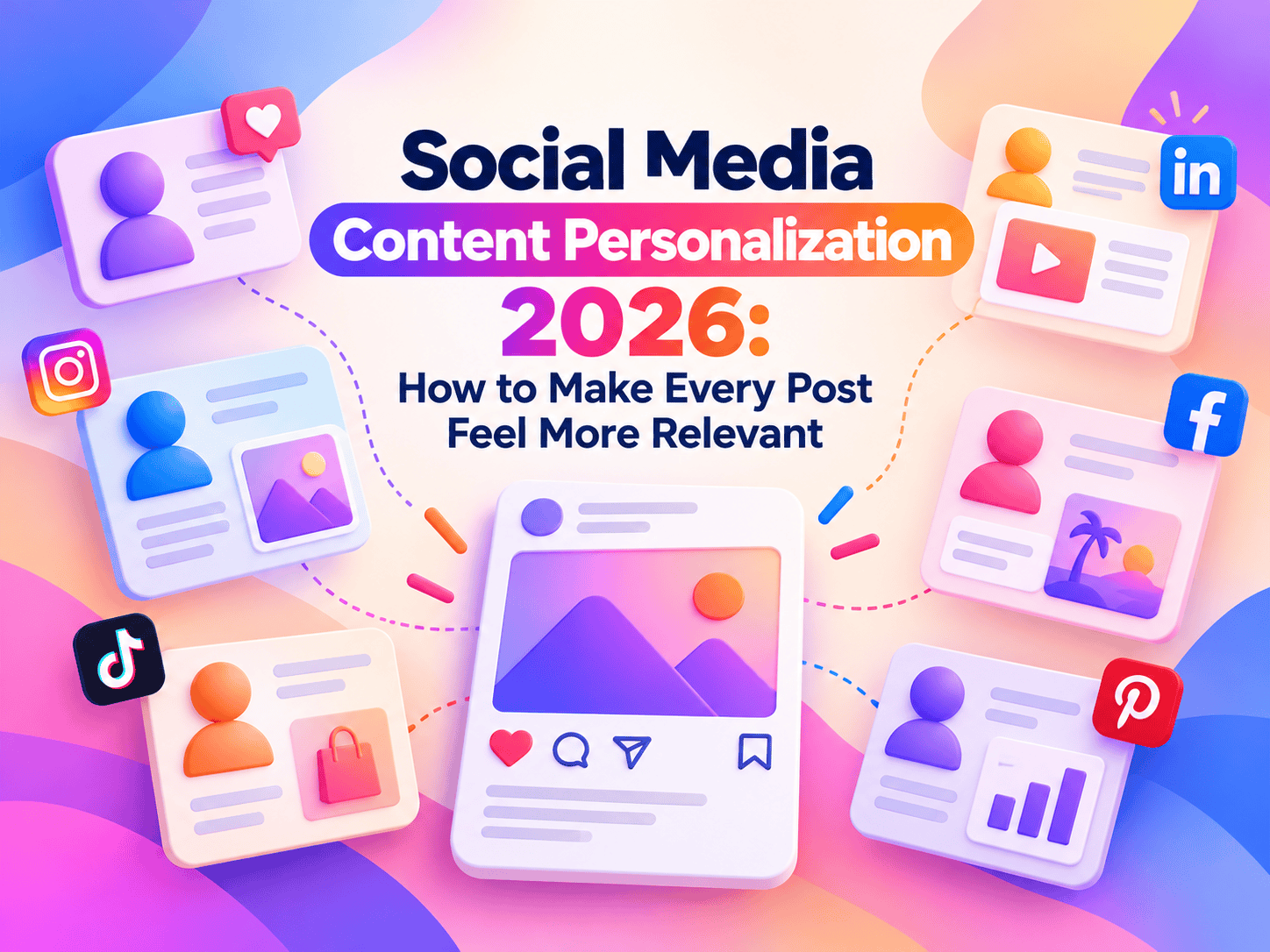
Social media content personalization helps brands create posts that match their audience’s interests, questions, and needs. Instead of sharing the same message with everyone, businesses can make their content more relevant to different groups of potential customers.
In 2026, relevance matters because people see content from many brands every day. A post is more likely to catch someone’s attention when it addresses a problem they recognize or provides information they actually need.
However, personalization does not mean creating a separate post for every follower. With the right approach, brands can adapt their topics, formats, and messages without making content production more complicated.
What Is Social Media Content Personalization?
Social media content personalization is the process of adapting content to the interests, preferences, and needs of a specific audience.
For example, a skincare brand might create educational posts for beginners and detailed ingredient explanations for experienced customers. Both groups receive useful information, but the content serves different needs.
A marketing agency could take a similar approach. Business owners who are new to social media may need basic planning advice, while established brands may want help improving conversions.
Both audiences may benefit from the agency’s services. Nevertheless, they may respond to different messages.
Personalization can include:
- Creating posts for different audience groups
- Answering questions at different stages of the buying journey
- Using examples that reflect customer interests
- Adapting content formats to platform preferences
- Sharing relevant tips based on audience feedback
- Tailoring calls to action to the purpose of each post
The goal is to make each piece of content feel useful, not overly targeted or intrusive.
Why Social Media Content Personalization Matters in 2026
People follow brands for different reasons. Some want education, others want entertainment, and many want help making a purchasing decision.
Therefore, a single content approach may not serve every audience equally well.
Sprout Social’s 2026 Social Media Content Strategy Report highlights the importance of understanding consumer preferences and adapting content to the way people use different platforms. Its research surveyed more than 2,300 consumers and 1,200 marketers across the United States, United Kingdom, and Australia.
This reinforces an important point: brands need to understand what their audiences want rather than relying only on assumptions.
Effective personalization can help businesses:
- Make content more relevant to potential customers
- Answer common questions before people contact the business
- Build stronger connections with different audience groups
- Create more useful educational posts
- Support product and service discovery
- Improve the chances that content leads to meaningful action
However, personalization alone does not guarantee engagement or sales. Content still needs a clear purpose, useful information, and a strong connection to the brand’s audience.
Understand What Different Audience Groups Need
Before personalizing content, identify the people you want to reach.
Start by reviewing your existing customers, audience insights, comments, direct messages, and frequently asked questions. These sources can reveal what people care about and what they need help understanding.
Next, group your audience by shared needs rather than relying only on demographic details.
For example, a business selling marketing services might identify three groups:
New business owners: They need straightforward advice on building a social media presence.
Growing businesses: They want a more consistent content plan and stronger audience engagement.
Established brands: They may need better reporting, creative testing, and support across multiple platforms.
Each group has different priorities. As a result, the same service can be presented through different examples and messages.
You do not need dozens of audience segments. Start with two or three meaningful groups and expand only when the data supports it.
Match Content to the Customer Journey

People need different information depending on how familiar they are with your business.
Someone discovering your brand for the first time may not be ready to book a call. Meanwhile, someone comparing service providers may want to understand your process, experience, or results.
Therefore, personalize content according to the next step you want to support.
When people are discovering your brand
Focus on useful, accessible content that introduces a problem and explains why it matters.
Examples include quick tips, common mistakes, industry explanations, and simple educational videos.
At this stage, the goal is to help people recognize your expertise without immediately pushing them to buy.
When people are evaluating their options
Provide more detailed information that helps potential customers make decisions.
For example, share process explanations, service comparisons, frequently asked questions, and examples of how your approach works.
These posts can help people understand whether your business is a good fit.
When people are ready to take action
Make the next step clear and relevant.
Depending on your business, this might mean booking a consultation, requesting a quote, visiting a product page, or sending a direct message.
Instead of using the same generic call to action on every post, connect it to the content and the customer’s likely needs.
Personalize Content Without Creating More Work
Personalization can sound time-consuming, especially for small marketing teams. Fortunately, you can make content more relevant without starting from scratch for every audience group.
One practical approach is to build content around a shared topic and adapt the angle.
For example, a post about social media planning could become:
- A beginner-friendly checklist
- A planning guide for growing businesses
- A strategic review for established brands
- A short video explaining one common planning mistake
The central topic remains the same, but each version addresses a different need.
In addition, you can repurpose useful content into different formats. A detailed blog post might inspire a carousel, a short video, and a question-and-answer post.
The important step is to adapt the message rather than simply copy the same caption everywhere.
Use Audience Feedback to Guide Personalization
Your audience already gives you clues about the content it wants.
Comments can reveal common concerns. Direct messages can highlight questions that need clearer answers. Meanwhile, saves and shares may help you identify posts people find useful enough to revisit or send to others.
Review these signals regularly.
For example, if people repeatedly ask how to plan a month of content, you could create a step-by-step carousel. If potential customers ask about pricing, you might publish a post explaining the factors that affect your service costs.
You can also ask direct questions through polls, Stories, and community discussions.
However, avoid treating one comment as proof that everyone has the same preference. Look for repeated patterns and test your ideas before changing your entire content strategy.
Adapt Personalization to Each Platform
A personalized message should also fit the platform where it appears.
On Instagram, a visual carousel might explain a process in simple steps. On TikTok, a short video could answer a specific question. LinkedIn may be better suited to a professional example or an in-depth industry insight.
Meanwhile, YouTube can support more detailed tutorials, while Facebook may offer opportunities for local discussions and community interaction.
The same audience need can inspire different formats across these channels.
For that reason, consider both the audience and the platform before publishing. Adjust the opening, format, tone, and call to action to suit the context.
Use AI Carefully and Keep the Human Perspective
AI tools can help marketers organize audience feedback, identify recurring questions, and brainstorm content ideas for different customer groups.
For example, a team could use AI to categorize common questions from its content planning notes and suggest possible post topics.
However, AI-generated suggestions still need human review.
A tool may produce generic messages, make unsupported assumptions about customers, or recommend personalization that feels intrusive. Your team should check the information, confirm the audience need, and make sure the final content sounds like your brand.
Also, protect customer privacy. Use appropriate, consent-based information and avoid exposing private details in public posts.
Personalization should make people feel understood, not watched.
Measure Whether Personalized Content Works
The right metrics depend on what each post is designed to achieve.
For educational content, review saves, shares, and meaningful comments. For discovery content, look at reach and views from relevant audiences. For conversion-focused posts, track website visits, inquiries, bookings, and sales where measurement is available.
Compare personalized posts with similar content that uses a broader message.
For example, test two versions of a post that address the same topic but speak to different audience needs. Review the results over time rather than choosing a winner based on one post.
In addition, consider the quality of the response. A post that generates fewer interactions but attracts relevant inquiries may be more valuable to your business than a post with many low-intent views.
Use these findings to refine your audience groups, topics, and calls to action.
Final Thoughts
Social media content personalization helps brands move beyond generic posting and create content that responds to real audience needs.
Start by identifying a few meaningful audience groups. Then, understand their questions, match content to their stage in the customer journey, and adapt your message for each platform.
Most importantly, use feedback and performance data to guide your decisions.
When personalization is practical, respectful, and useful, it can help your brand build stronger connections and create more opportunities to turn attention into customers.

2 Responses
Enjoyed this piece on Social Media Content Personalization 2026: How to Make Every Post Feel More Relevant. You made the ideas feel doable rather than overwhelming — thanks for sharing.
cool!