
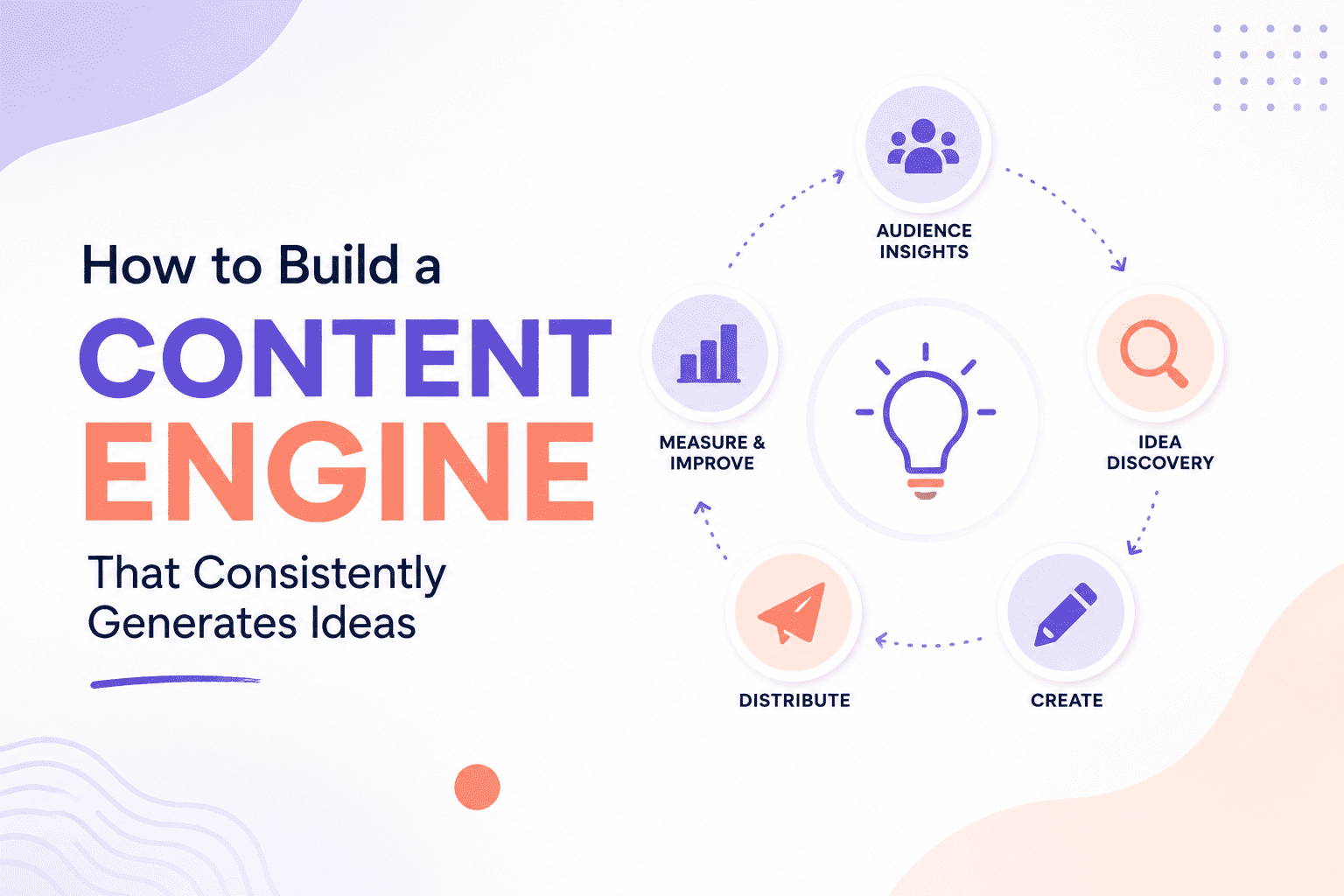
Coming up with fresh content ideas can feel like one of the biggest challenges in social media marketing. Many creators, brands, and businesses find themselves staring at a blank content calendar wondering what to post next.
The reality is that successful content creation rarely relies on random inspiration. Instead, top creators and marketers use a content engine to generate ideas consistently and maintain a steady flow of valuable content.
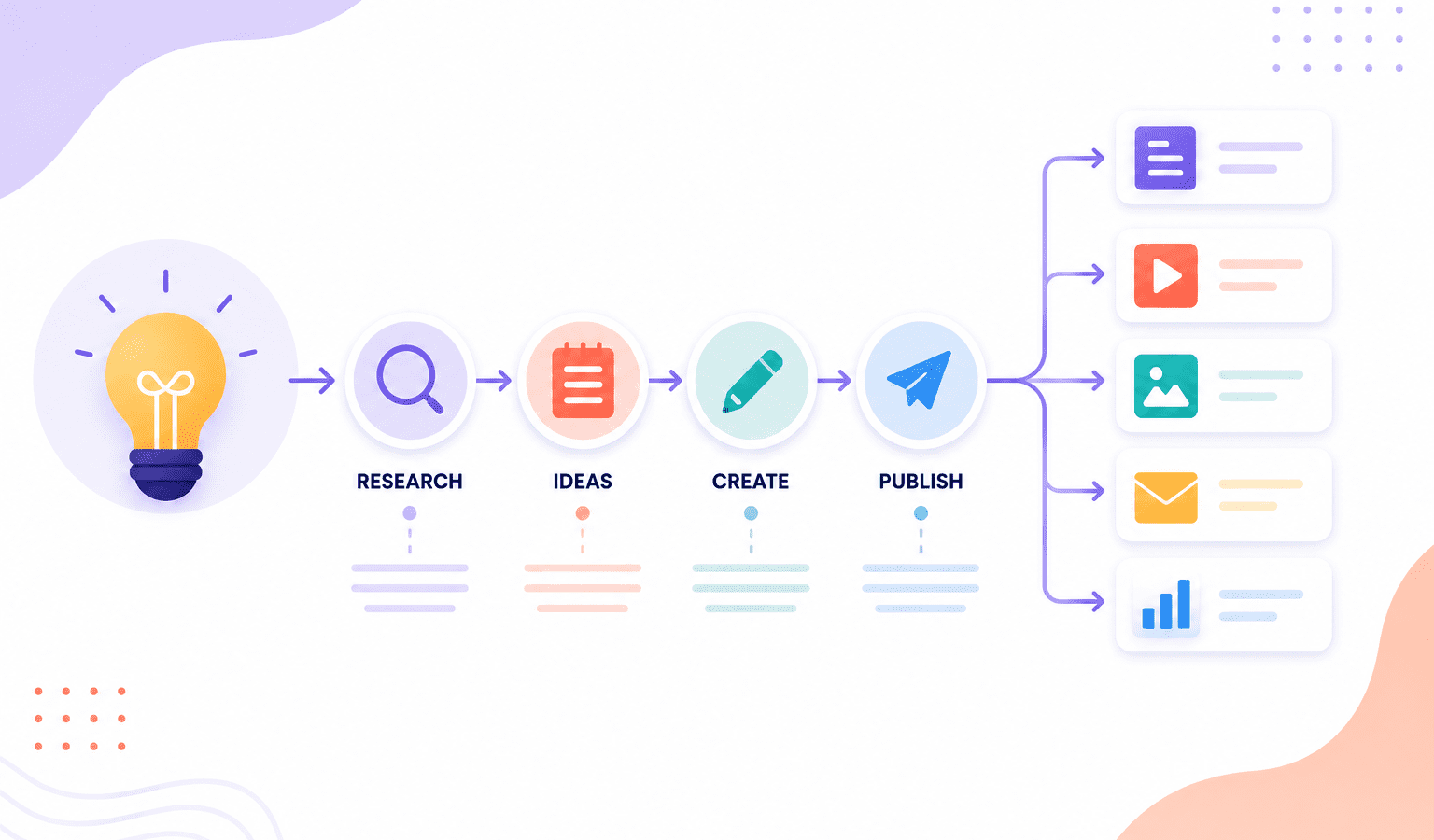
A content engine is a repeatable system that helps you collect ideas, identify audience interests, and transform insights into content across multiple platforms. Rather than constantly searching for new topics, you create a process that continuously fuels your content strategy.
In this guide, we’ll explore how to build a content engine that consistently generates content ideas and supports long term growth.
What Is a Content Engine?

A content engine is a structured system for discovering, organizing, creating, and repurposing content ideas.
Rather than relying on creativity alone, a content engine uses multiple sources of information to generate relevant content opportunities.
A strong content engine helps you:
- Generate ideas consistently
- Reduce content planning stress
- Improve content quality
- Stay relevant to your audience
- Maintain a regular publishing schedule
- Scale content production more efficiently
The goal is to create a sustainable process that supports your content efforts over time.
Why Every Brand and Creator Needs a Content Engine
One of the biggest reasons content strategies fail is inconsistency.
When ideas run out, posting slows down. When posting slows down, engagement often follows.
A content engine helps eliminate this problem by creating a reliable source of inspiration.
Benefits include:
- Better content planning
- More audience focused content
- Increased efficiency
- Improved engagement opportunities
- Reduced creative burnout
- Stronger long term growth
Instead of asking “What should I post today?” you already have a system generating ideas for you.
Start With Audience Research
The best content ideas often come directly from your audience.
Pay attention to:
- Frequently asked questions
- Comments and messages
- Customer feedback
- Community discussions
- Industry conversations
Understanding what your audience wants to learn can provide an endless source of content opportunities.
For a deeper look at audience research, check out our guide on Social Listening: How to Turn Audience Conversations Into Content Opportunities.
Create Content Pillars
Content pillars help organize your content into key categories that align with your audience’s interests.
Examples may include:
- Industry education
- Tips and tutorials
- Behind the scenes content
- Industry trends
- Success stories
- Community highlights
Having clear pillars makes it easier to generate ideas while maintaining consistency.
Most successful content strategies rely on three to five primary content pillars.
Build an Idea Collection System
Great ideas often appear when you least expect them.
Create a central location where ideas can be captured immediately.
This may include:
- Notes app
- Content spreadsheet
- Project management tool
- Content planning platform
Whenever you encounter:
- Interesting questions
- Industry news
- Customer feedback
- Trending discussions
Add them to your idea bank.
Over time, this creates a valuable repository of future content opportunities.
Use Search Data for Content Inspiration
Search behavior provides direct insight into audience interests.
Monitor:
- Google search suggestions
- Frequently asked questions
- Industry keywords
- Related search topics
These searches often reveal what your audience actively wants to know.
If you’re looking to improve discoverability, read our guide on Social Media SEO 2026: How to Make Your Content More Discoverable.
Turn One Idea Into Multiple Pieces of Content
One of the most effective content engine strategies is content repurposing.
A single idea can become:
- Blog articles
- Instagram carousels
- Reels
- TikTok videos
- LinkedIn posts
- Email newsletters
For example, one blog article can generate multiple weeks of content across different platforms.
This approach helps maximize the value of every idea.
Monitor Industry Trends
While your content engine should not rely entirely on trends, monitoring industry developments can help generate timely content opportunities.
Watch for:
- Platform updates
- Industry news
- New features
- Consumer behavior shifts
The key is to connect trends back to your audience’s interests and needs.
Analyze Your Best Performing Content
Your existing content can be one of your most valuable sources of future ideas.
Review content that generated:
- High engagement
- Strong reach
- Website traffic
- Shares and saves
- Positive feedback
Look for patterns in:
- Topics
- Formats
- Headlines
- Audience reactions
These insights can help guide future content creation.
For more insights, explore our guide on How to Use Data to Improve Your Social Media Strategy.
Common Content Engine Mistakes
Even strong content strategies can run into challenges.
Avoid these common mistakes:
- Relying solely on inspiration
- Ignoring audience feedback
- Creating content without a strategy
- Failing to organize ideas
- Chasing every trend
- Not analyzing performance
A successful content engine combines creativity with structure.
The Long Term Benefits of a Content Engine
Building a content engine requires some initial effort, but the long term benefits are significant.
Over time, you’ll gain:
- A growing library of content ideas
- Greater efficiency
- Improved consistency
- Better audience understanding
- More strategic content planning
Most importantly, you’ll spend less time searching for ideas and more time creating valuable content.
Final Thoughts
A successful content strategy is not built on occasional bursts of inspiration. It is built on systems and processes that consistently generate relevant content opportunities.
A content engine allows creators, brands, and businesses to maintain momentum, improve consistency, and create content that aligns with audience interests.
By combining audience research, content pillars, search insights, trend monitoring, and performance analysis, you can develop a content engine that continually fuels your growth.
The best content creators are not necessarily the most creative. They are often the most consistent.
Ready to Build a Stronger Content Strategy?
At Ampfluence, we help creators, brands, and businesses develop content strategies designed to improve visibility, increase engagement, and support sustainable growth.
Whether you’re building your first content engine or looking to optimize an existing strategy, our team can help you create a system that consistently delivers results.
Ready to take the guesswork out of content creation? Start building a content engine that works for you.
Key Takeaways
- A content engine is a repeatable system for generating content ideas.
- Consistent content creation relies more on systems than inspiration.
- Audience research is one of the most valuable sources of content ideas.
- Content pillars help organize and streamline content planning.
- Search data can reveal valuable audience interests and questions.
- One content idea can be repurposed into multiple formats and platforms.
- Industry trends can support content planning when used strategically.
- Performance analysis helps identify future content opportunities.
- A strong content engine improves consistency, efficiency, and long term growth.





2 Responses
I really loved how you broke down the content idea generation process! It made it seem way less daunting. Your tips on using audience feedback were especially helpful—have you found any specific platforms or tools that work best for gathering those insights? I’m curious if something like engaging with a gaming community, just like geometry dash enthusiasts, could spark even more creativity!
What’s up, folks? A YouTube ad popped up during a video, bringing me to Elbow River Casino. I stayed because their mobile interface looked incredibly smooth for my aging phone. I was in a dark place, having lost a painful amount of money on my daily commutes and swearing off online betting forever. I decided to try one last spin on the bus ride home. I triggered a bonus game with a massive multiplier. It completely erased my terrible transit losses and left me with enough extra cash to be very happy. It feels great to win in Canada after such a rough patch.