Creating high quality content takes time, effort, and creativity. From writing blog posts to designing graphics and filming videos, every piece of content requires an investment.
The problem is that many brands only use their content once.
A blog gets published and never shared again. A Reel performs well for a few days before disappearing into the feed. A LinkedIn post generates engagement but is quickly forgotten.
The reality is that most businesses do not have a content creation problem. They have a content utilization problem.
A strong Content Repurposing Strategy helps you maximize the value of every piece of content by adapting it for different platforms, formats, and audiences. Instead of constantly creating something new, you can extend the life of your best ideas while reaching more people.
In 2026, successful brands are not necessarily creating more content than everyone else. They are creating smarter systems that help every piece of content work harder.
What Is a Content Repurposing Strategy?
A Content Repurposing Strategy is the process of transforming one piece of content into multiple formats while maintaining the same core message.
Repurposing is not the same as simply reposting content.
Instead, it involves adapting content to fit the strengths of each platform and audience.
For example, one blog post can become:
- An Instagram carousel
- A LinkedIn article
- A short Reel
- An email newsletter
- An X thread
- Pinterest Pins
- Instagram Stories
- A YouTube Short
Rather than starting from scratch every time, you build upon content that already exists.
Why Content Repurposing Matters More Than Ever

Today’s marketers are expected to create content for more platforms than ever before.
At the same time, social media posts often have a very short lifespan.
Instead of producing entirely new content every day, brands can create one valuable resource and expand it into multiple pieces of content.
Repurposing offers several benefits.
It helps brands:
- Save time
- Increase content output
- Reach different audiences
- Improve brand consistency
- Maximize return on content investments
- Strengthen SEO through supporting content
Most importantly, it allows businesses to focus on quality instead of quantity.
One Piece of Content Can Become Ten
One of the biggest advantages of repurposing is how much value you can create from a single idea.
Imagine publishing a blog about social media engagement.
That one article could become:
- An Instagram carousel explaining the key points
- A Reel summarizing the biggest takeaway
- A LinkedIn post with professional insights
- An X thread breaking down each strategy
- Several Instagram Stories
- A newsletter for subscribers
- Pinterest graphics
- Short educational videos
- Downloadable guides
- Future blog updates
Instead of creating ten separate ideas, you create one strong idea and expand it across multiple channels.
This creates consistency while reducing the pressure to constantly brainstorm new content.
Five Ways to Repurpose Content Effectively
Turn Blog Posts Into Social Media Content
Long form articles are excellent sources of social media content.
Break each section into smaller educational posts that can be shared as carousels, graphics, or short videos.
One blog can provide weeks of content across multiple platforms.
Transform Videos Into Short Form Clips
A webinar, podcast, or long video can easily become several short clips.
Highlight key insights, tips, or memorable quotes that perform well on platforms like Instagram Reels, TikTok, and YouTube Shorts.
This allows you to reach audiences who prefer short form content.
Update High Performing Content
Not every piece of content needs to be completely new.
Review your analytics and identify posts that performed well.
Refresh the information, update statistics, improve the visuals, and publish a new version.
Evergreen content often becomes even more valuable over time.
Combine Related Content Into Larger Resources
Several smaller posts can become a more comprehensive guide.
For example, multiple Instagram posts about social media strategy could become a downloadable ebook, blog article, or webinar.
Combining content creates additional value while reaching audiences who prefer longer resources.
Answer Common Questions
Your audience provides content ideas every day.
Frequently asked questions from comments, emails, and direct messages can become blogs, videos, FAQs, or educational social media posts.
This ensures your content addresses real problems your audience wants solved.
Building a Repurposing Workflow
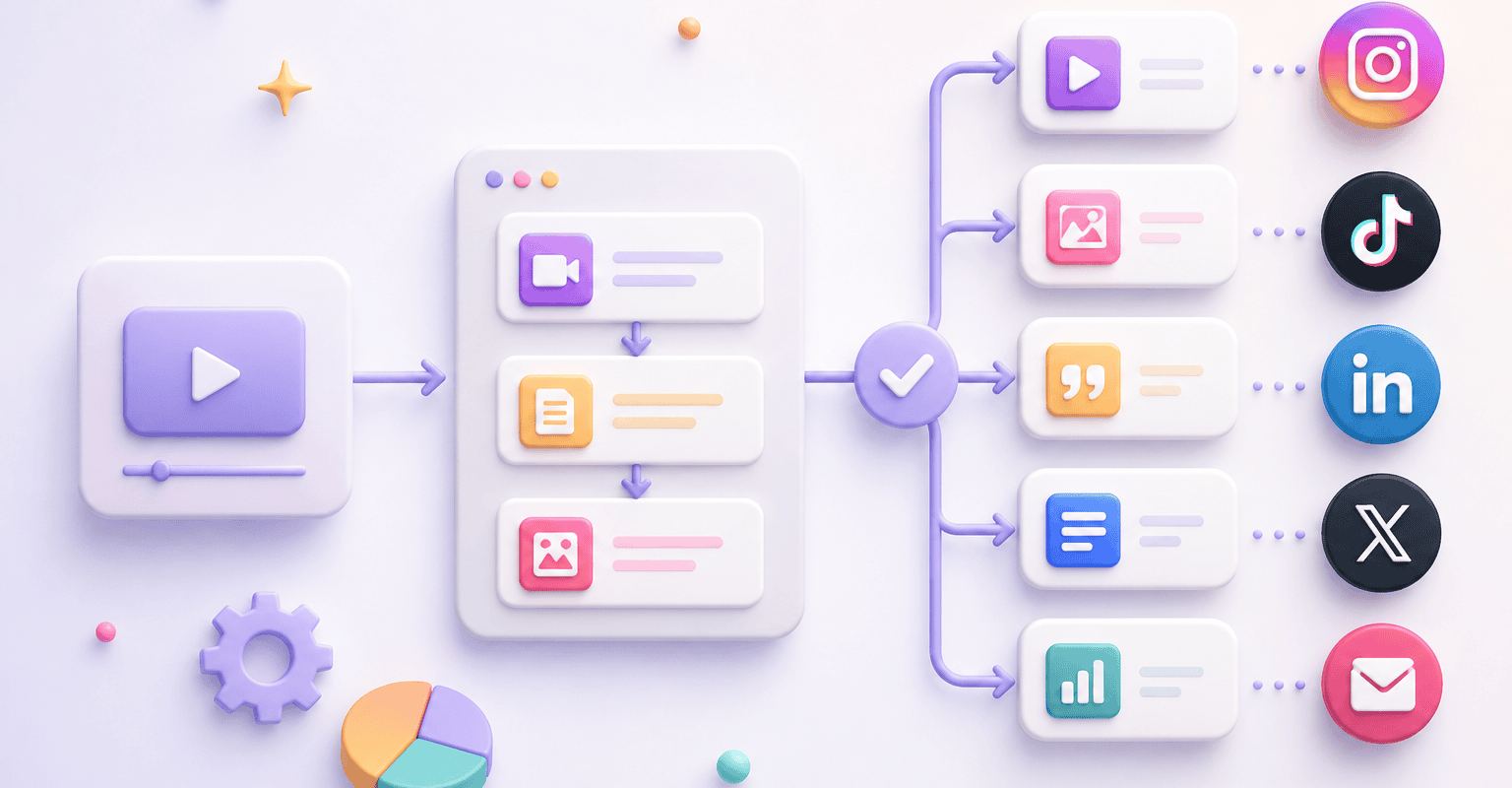
Repurposing works best when it becomes part of your overall content strategy.
Instead of deciding what to repurpose after publishing, plan for it from the beginning.
A simple workflow might include:
- Creating one core piece of content each week
- Identifying opportunities for different platforms
- Designing reusable templates
- Scheduling content over several weeks
- Monitoring performance
- Updating successful content regularly
A structured workflow saves time while ensuring your content continues delivering value long after it is first published.
Common Content Repurposing Mistakes
While repurposing is powerful, there are several mistakes brands should avoid.
- Copying and pasting the same content across every platform
- Ignoring platform specific audiences
- Republishing outdated information
- Focusing only on creating new content
- Forgetting to review analytics before repurposing
Successful repurposing adapts content instead of simply repeating it.
Every platform has different audience expectations and content formats.
The Future of Content Repurposing
As artificial intelligence and social media continue evolving, content repurposing will become even more important.
Brands are already using AI to help summarize articles, generate captions, organize content calendars, and identify high performing topics.
However, technology should support strategy rather than replace it.
The brands that succeed will combine smart automation with human creativity to produce valuable content across multiple platforms.
Repurposing will become less about producing more content and more about building complete content ecosystems where every piece supports the next.
Key Takeaways
- A Content Repurposing Strategy helps maximize the value of every piece of content.
- Repurposing is different from simply reposting the same content.
- One blog can become multiple pieces of content across different platforms.
- A structured workflow saves time while improving consistency.
- Updating and expanding existing content often delivers better results than constantly creating something new.
- The future of content marketing focuses on smarter systems rather than producing more content.
Final Thoughts
Creating great content takes time, but its value should not end after one post.
A well planned Content Repurposing Strategy allows businesses to extend the life of their best ideas, reach new audiences, and build a more consistent presence across multiple platforms.
Instead of asking, “What should we create next?” start asking, “How can we get more value from what we have already created?”
That shift in thinking can transform the way your brand approaches content marketing.
At Ampfluence, we help businesses build smarter social media strategies through content planning, organic audience growth, and strategic repurposing. By creating systems that maximize every piece of content, we help brands increase visibility, improve engagement, and achieve long term growth.
Ready to get more value from every piece of content you create?
Visit Ampfluence to discover how our team can help you build a content strategy that works smarter, not harder.