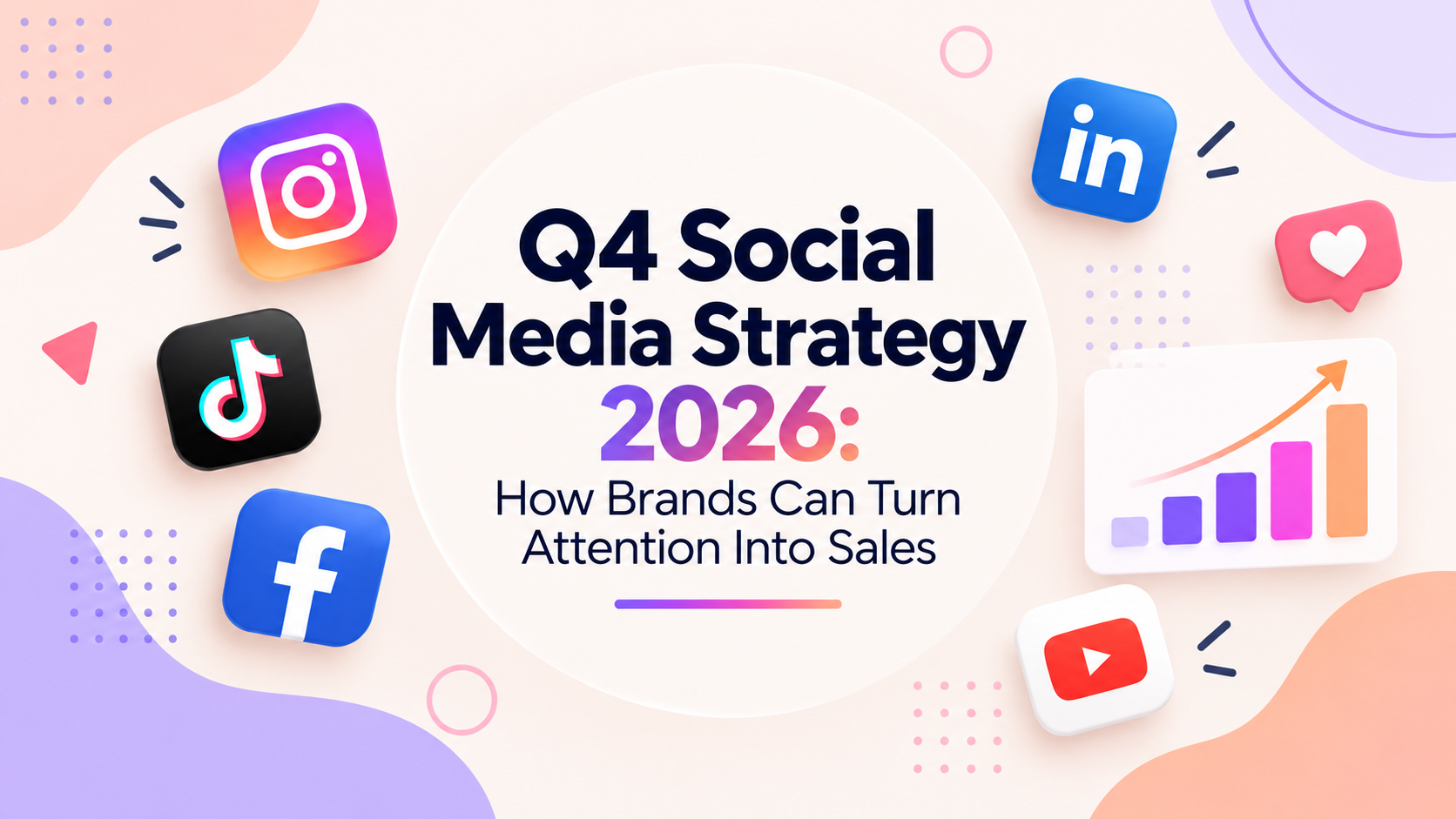
Q4 is one of the biggest opportunities of the year for brands, but attention alone does not guarantee sales. A strong Q4 social strategy helps businesses turn content, conversations, and audience interest into meaningful customer action. Instead of posting more simply because the holiday season is approaching, brands need to create content that supports real business goals.
The final quarter brings higher buying intent, seasonal campaigns, promotions, and important shopping moments. Therefore, your social media strategy should be built around what you want customers to do next.
Why Q4 Social Strategy Matters
During Q4, customers are often more ready to research products, compare options, and make purchasing decisions. As a result, social media can play an important role throughout the customer journey.
People may first discover your brand through a video. Later, they might visit your profile, read reviews, compare your offer with another brand, or send you a direct message. Finally, they may become a customer.
Your content should support each of these steps.
A Q4 social strategy gives your brand a clear structure for doing that. Rather than treating every post as a separate piece of content, you can connect your posts to larger goals such as product discovery, lead generation, website visits, sales, or repeat purchases.
Start With Your Q4 Business Goals

Before planning your content calendar, decide what you actually want to achieve during Q4.
For example, your main goal could be:
- Increase product or service sales
- Generate more qualified leads
- Promote a seasonal offer
- Increase website traffic
- Build awareness for a new product
- Reconnect with existing customers
- Increase repeat purchases
Once the goal is clear, your content becomes easier to plan.
For instance, a brand focused on sales may prioritize product demonstrations, customer reviews, FAQs, comparison content, and promotional posts. Meanwhile, a brand focused on lead generation may use educational content, social proof, lead magnets, and direct messages.
The important point is to connect your social media activity to a measurable business outcome.
Build Your Q4 Social Strategy Around Customer Intent
Not every customer is ready to buy immediately. Therefore, your Q4 content should address different levels of buying intent.
At the discovery stage, create content that introduces your brand and explains the problem you solve. Short videos, educational posts, and relatable content can help people understand what you offer.
Next, create content for people who are considering their options. Product comparisons, demonstrations, testimonials, case studies, and frequently asked questions can help remove uncertainty.
Finally, make it easy for interested customers to take action. Clear calls to action, product links, special offers, and simple next steps can reduce friction.
This approach creates a more complete customer journey instead of relying on promotional posts alone.
Create Content That Builds Trust
Q4 can be a noisy period on social media. Many brands increase their promotional activity, which means customers have more offers competing for their attention.
Because of this, trust becomes especially important.
Customer testimonials can show how your product or service works in real situations. Behind-the-scenes content can make your brand feel more human. User-generated content can provide social proof from people who have already experienced your offer.
In addition, educational content can demonstrate your expertise before you ask someone to buy.
For example, instead of posting only “Shop our Q4 offer,” explain how your product solves a common problem. Then, show the product in action and include a clear next step.
This creates a stronger reason for someone to consider your brand.
Turn Existing Content Into More Q4 Assets
You do not need to create completely new content every day during Q4. Instead, look at what has already performed well and find new ways to use it.
A strong blog post can become a carousel, short video, quote graphic, email topic, LinkedIn post, or series of Stories. Likewise, an existing customer testimonial can become several pieces of social proof.
This saves time while keeping your messaging consistent.
Repurposing is also useful when you want to increase the number of touchpoints before a major buying moment. Rather than repeating the exact same post, change the format and angle while keeping the main idea connected.
As a result, one strong idea can continue working across multiple channels.
Use Promotions With a Clear Purpose
Promotions can be powerful during Q4, but discounts should not become your entire strategy.
Instead, give each offer a clear purpose.
A limited-time promotion can create urgency. A bundle can increase average order value. A free consultation can encourage qualified leads to start a conversation. An exclusive offer for existing customers can support retention.
However, make sure your audience understands the value before presenting the offer.
Your content should answer simple questions such as:
What is the offer?
Who is it for?
Why does it matter?
When does it end?
What should the customer do next?
Clear messaging makes promotional content easier to understand and act on.
Make Every Platform Play a Role
Your Q4 social strategy should not require identical content across every platform.
Instead, consider what each channel does best.
Instagram can support visual storytelling, Reels, product content, and community engagement. TikTok can help brands reach people through discovery and useful or entertaining short-form content. LinkedIn can support B2B education, expertise, and lead generation. Facebook can help brands connect with established audiences, communities, and promotional campaigns.
The same campaign idea can therefore appear in different formats.
For example, a product launch could begin with a short educational video, followed by an Instagram carousel, a LinkedIn explanation, customer testimonials, and a promotional Story.
This approach keeps the campaign connected without making every platform feel identical.
Make Social Media Easier to Convert
Getting attention is only the first step. Your audience also needs a clear path toward action.
Check your profile before launching your Q4 campaigns. Make sure your bio clearly explains what you offer. Confirm that your website or landing page works properly. Review your links, contact options, and calls to action.
Then, make sure your social content matches the destination.
If a post promotes a specific service, the linked page should explain that service clearly. If a post promotes a product, customers should not have to search for it after clicking.
Small improvements can make a significant difference because every extra step creates another opportunity for someone to leave.
Measure What Actually Matters
Follower growth can be useful, but it should not be the only measure of Q4 performance.
Instead, track metrics that connect social media to your business goals.
These may include:
- Website clicks
- Qualified leads
- Direct message inquiries
- Product page visits
- Conversion rate
- Sales generated
- Email sign-ups
- Cost per lead
- Revenue from campaigns
Engagement still matters because comments, saves, shares, and conversations can show whether your content is connecting with the right audience.
However, business results should remain the bigger focus.
Review your results throughout Q4 rather than waiting until the end of December. If one content format generates more qualified leads, create more of it. If a promotion gets attention but few conversions, review the offer or customer journey.
That way, your strategy can improve while the quarter is still active.
Plan Your Q4 Social Strategy Before the Rush
The biggest mistake brands can make is waiting until the busiest part of Q4 to start planning.
Instead, map out your key campaigns, offers, content themes, and important dates early. Then, identify the assets you need and create them before deadlines become urgent.
A simple planning process can look like this:
- Define your Q4 revenue or lead goal.
- Identify your most important products or services.
- Choose the campaigns and offers that support those goals.
- Plan content around customer questions and buying intent.
- Repurpose your strongest existing content.
- Prepare creative assets and landing pages.
- Schedule content while leaving room for timely posts.
- Review performance and adjust throughout the quarter.
This process gives your team direction while still allowing flexibility.
Turn Q4 Attention Into Long-Term Growth
Q4 should not be treated as a final push for the year. Instead, use the quarter to learn what your audience responds to and carry those lessons into the following year.
Your best-performing topics can become part of your future content strategy. Customer questions can inspire new educational posts. Successful offers can reveal what your audience values most.
Most importantly, the relationships you build during Q4 can continue after the holiday season.
A strong Q4 social strategy therefore does more than generate short-term attention. It helps your brand create useful content, build trust, understand customer behavior, and guide people toward action.
Final Thoughts
Q4 gives brands a valuable opportunity to turn social media attention into measurable business results. However, success depends on having a clear plan rather than simply publishing more content.
Start with your business goals. Then, build content around customer intent, strengthen trust, use existing content more effectively, and create clear paths to conversion.
Finally, measure the results and adjust your approach as the quarter progresses.
With the right Q4 social strategy, your social media presence can do more than generate likes and views. It can help attract the right audience, support customer decisions, and contribute directly to your business growth.