How often should your business post on social media? It is a common question for brands trying to grow their online presence. Some businesses publish every day, while others share only a few posts each week. However, posting more often does not always lead to better results.
Social media posting frequency is about finding a schedule your business can maintain while giving your audience useful content. The right approach depends on your industry, audience, platforms, and available resources.
Instead of focusing only on the number of posts, consider what each post contributes to your marketing goals. A helpful carousel, an informative video, or a relevant customer story can provide more value than several rushed updates.
In this guide, you will learn how to choose a posting schedule, plan content for different platforms, and understand when it is time to adjust your publishing routine.
What Is Social Media Posting Frequency?
Social media posting frequency refers to how often a business publishes content on its social media accounts over a certain period.
This may include feed posts, carousels, short-form videos, Stories, and other platform-specific formats. For example, a business might publish three Instagram posts, two TikTok videos, and two LinkedIn updates each week.
However, every business has different content needs. A company with a dedicated marketing team may have the resources to publish more often. Meanwhile, a small business with limited time may need a simpler schedule.
The goal is to find a balance between staying active and maintaining content quality.
Why Social Media Posting Frequency Matters
A consistent publishing routine helps your audience recognize your brand and gives people more opportunities to discover your content.
It also gives your team a clear production schedule. As a result, you can plan topics, prepare designs, write captions, and review posts before their publishing dates.
A suitable posting frequency can help your business:
- Maintain a consistent online presence.
- Share useful information with your audience.
- Create more opportunities for discovery.
- Build familiarity with potential customers.
- Organize content production.
- Review performance over time.
However, publishing frequently without a clear purpose can create unnecessary work. It may also lead to repetitive topics and weaker content.
Therefore, your schedule should support your marketing strategy rather than become a goal on its own.
1. Choose a Posting Schedule Your Team Can Maintain
Before deciding how many times to post, review your available resources.
Consider how much time your team needs for research, writing, design, video editing, approvals, and scheduling. These tasks all affect how much content you can produce.
For example, a small business managing its own social media might begin with three quality posts per week. A larger company with a dedicated content team may have enough resources to publish more often.
Start with a realistic schedule instead of trying to publish every day immediately.
Then, maintain that schedule for several weeks. This gives you enough time to review the results and understand whether your team can handle the workload.
Most importantly, avoid sacrificing quality just to meet a publishing target.
2. Adjust Your Posting Frequency for Each Platform
Different platforms support different content formats and audience behaviors. Therefore, your business should not automatically use the same schedule everywhere.
For example, Instagram may be part of a visual content strategy, while LinkedIn may support professional insights and industry discussions.
Use the following schedule as a starting point, not a fixed rule:
| Platform | Suggested starting schedule |
|---|---|
| 3 to 5 feed posts per week | |
| TikTok | 2 to 5 videos per week |
| 2 to 4 posts per week | |
| 3 to 5 posts per week | |
| YouTube | 1 video per week |
| YouTube Shorts | 2 to 3 videos per week |
These ranges are planning suggestions rather than official platform requirements. Your audience and content resources may call for a different schedule.
For instance, a business that creates detailed educational videos may publish less often than a brand that shares short updates. Similarly, a professional service provider may prefer fewer, more informative LinkedIn posts.
Start with a manageable routine. Afterward, use your analytics to decide whether to publish more or less often.
3. Put Content Quality Before Quantity
Publishing frequently will not help much if your posts give people no reason to pay attention.
Before adding another post to your calendar, ask whether it offers something useful. Does it answer a customer question? Does it explain a problem? Can it help someone make a decision?
For example, instead of publishing several generic promotional graphics, create a carousel that explains a common challenge your customers face.
You could also turn one important point from that carousel into a short video. This gives your audience another way to understand the topic without repeating the exact same post.
In addition, make sure each piece of content has a clear purpose. Educational posts, brand stories, and promotional content can all support your strategy, but they should not communicate the same message every time.
4. Build a Weekly Social Media Posting Schedule
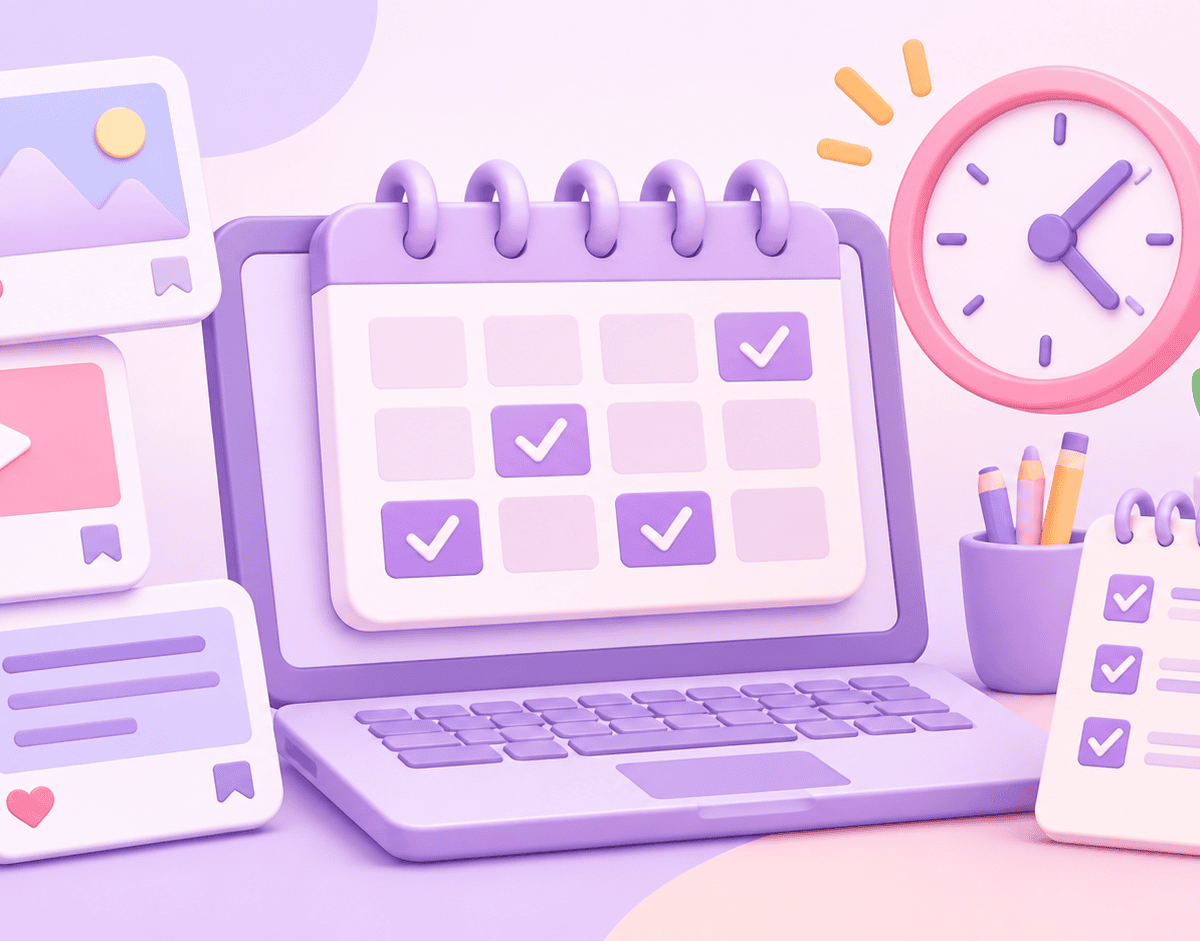
A content calendar makes it easier to manage your social media posting frequency. It also helps your team understand what needs to be created and when it should be published.
Start by choosing a few content categories that support your business goals.
These may include:
- Educational tips and tutorials.
- Industry news and updates.
- Brand stories and behind-the-scenes content.
- Customer questions and common problems.
- Service information and promotional posts.
Next, assign these categories to different days.
Here is an example of a Monday-to-Friday schedule:
| Day | Content idea | Main purpose |
|---|---|---|
| Monday | Educational carousel | Share useful information |
| Tuesday | Short-form video | Introduce a topic or reach new viewers |
| Wednesday | Customer question | Encourage conversation |
| Thursday | Brand or service post | Explain your value |
| Friday | Practical tip or recap | Reinforce your expertise |
You do not need to publish every format on every platform. Instead, adapt the schedule to the channels that matter most to your audience.
Meanwhile, leave room for timely updates and relevant industry conversations. A flexible calendar is easier to maintain than a schedule that cannot accommodate changes.
5. Use Content Repurposing to Save Time
Creating completely new content every day can become difficult. Fortunately, one strong idea can often become several useful pieces of content.
This is where content repurposing can help.
For example, a detailed blog article could become:
- An Instagram carousel explaining its main points.
- A short video sharing one practical tip.
- A LinkedIn post discussing the business impact.
- Several short educational posts.
- A newsletter featuring the key takeaway.
Each version should fit the platform and its audience. Simply copying the same caption and visual everywhere may make the content feel repetitive.
Instead, change the format and focus while keeping the central message consistent.
As a result, your team can maintain a steady publishing schedule without constantly starting from scratch.
6. Use Audience Insights to Plan Your Publishing Times
Posting frequency and publishing time are two different parts of your schedule.
Frequency tells you how often to publish. Timing helps you decide when to share each post.
Check your platform analytics to see when your audience is active. Look for patterns across different days and times.
For example, your audience may interact more with professional content during the workweek. Another audience may be more active during evenings or weekends.
However, do not assume that one popular posting time will work for every account.
Test different time slots and compare the results. Over time, you can identify patterns that help guide your publishing schedule.
7. Measure Whether Your Posting Frequency Is Working
A full content calendar does not automatically mean your strategy is successful.
Review your results based on the purpose of each post. This helps you understand whether your publishing schedule supports your business goals.
Useful metrics include:
- Reach: How many unique people saw your content.
- Engagement: How people interacted with your posts.
- Saves and shares: Whether people found your content useful enough to keep or share.
- Video watch time: How long viewers stayed with your videos.
- Profile visits: Whether people wanted to learn more about your business.
- Website clicks: Whether social content encouraged further action.
- Inquiries: Whether your content helped attract potential customers.
For example, a post designed to increase brand awareness may perform well through reach and video views. Meanwhile, a service-focused post may be more valuable when it generates website visits or inquiries.
Therefore, do not judge every post using the same metric.
Compare results over several weeks. If fewer posts produce stronger engagement and more relevant inquiries, increasing your publishing frequency may not be necessary.
8. Know When to Change Your Posting Schedule
Your social media posting frequency should change when your audience, business priorities, or available resources change.
For example, a product launch may require additional content. A seasonal campaign may also need more frequent updates.
On the other hand, a busy production period may require a smaller schedule so your team can maintain quality.
Review your routine regularly and ask:
- Are we publishing consistently?
- Can our team manage the current workload?
- Are people responding to our content?
- Which platforms bring relevant engagement?
- Are our posts supporting business goals?
- Do we have enough time to improve our content?
If your team is struggling to meet deadlines, simplify the schedule. Alternatively, if production is running smoothly and your results show room for growth, test additional posts gradually.
Make changes based on performance rather than pressure to publish more.
Final Thoughts
The right social media posting frequency helps your business stay visible without overwhelming your audience or content team.
There is no perfect number of posts for every brand. Your schedule should reflect your audience, platforms, resources, and marketing goals.
Start with a manageable routine, create content with a clear purpose, and review your results regularly. Most importantly, focus on giving people a reason to engage with your brand.
At Ampfluence, we help brands plan and manage strategic social media content that connects with the right audience and supports business growth. Visit Ampfluence to learn how we can help your brand build a consistent and effective social media presence.