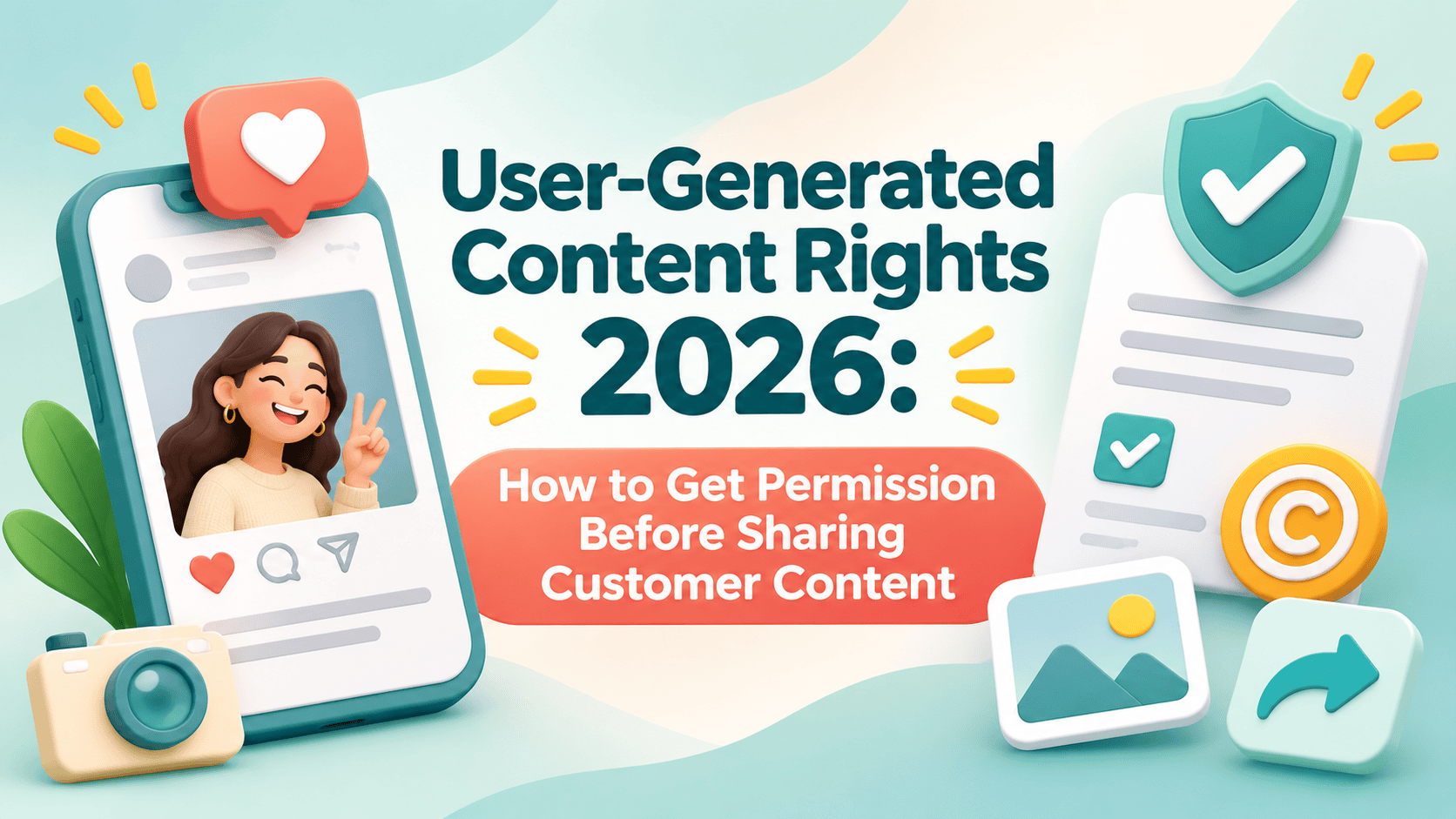
Customer photos, videos, and reviews can make social media content feel more genuine. They show how real people experience a product or service, giving potential customers a different perspective from traditional brand advertising.
However, finding customer content online does not automatically give a business permission to reuse it.
User-generated content rights are an important part of responsible social media marketing. Brands need to understand who owns the content, what permission is required, and how the material may be used.
In this guide, you will learn how to request permission, document approvals, and share customer-created content more responsibly.
What Are User-Generated Content Rights?
User-generated content rights refer to the legal and permission-related considerations involved when a brand uses content created by customers or other individuals.
This content may include:
- Customer photos and videos.
- Product reviews and testimonials.
- Social media posts and stories.
- Unboxing videos.
- Tutorials and demonstrations.
- Comments or other creative contributions.
The person who creates a photo or video generally holds copyright in that work, subject to applicable law and specific circumstances. A brand should not assume that content becomes free to use simply because it appears on a public social media account.
In addition, a post may contain other rights and privacy considerations, such as recognizable people, music, artwork, or personal information.
Therefore, brands should establish a clear permission process before using customer-created material in their marketing.
Why User-Generated Content Rights Matter in 2026

User-generated content can help brands show real experiences and build trust. However, using it without proper permission can create legal, reputational, and customer relationship problems.
A customer may be happy to share a photo on their own account but may not want it used in a paid advertisement or on a company’s website.
Similarly, permission to repost one image does not necessarily cover editing it, using it in a campaign, or sharing it across several platforms.
A clear permission process helps your business:
- Respect the original creator.
- Reduce the risk of copyright disputes.
- Explain how content will be used.
- Keep records of customer approvals.
- Protect your brand’s reputation.
- Build better relationships with your community.
The goal is to make content sharing transparent and respectful from the beginning.
1. Understand Who Created the Content
Before requesting permission, identify the original creator.
A customer may upload a photo featuring a product, but another person may have taken the picture. In some cases, the content may also include music, artwork, or other material created by someone else.
Do not assume that the person who posted the content owns every element in it.
If ownership is unclear, ask questions before using the material. You may need permission from the photographer, creator, or other relevant rights holder.
For brands, this first step helps avoid confusion later. It also makes it easier to contact the right person when requesting permission.
2. Ask for Permission Before Reposting
A public post is not the same as an invitation for every business to reuse it.
Before sharing customer-created content, contact the creator and clearly explain what you would like to use.
For example, you could send a message like this:
“Hi! We love your post featuring our product. Would you be comfortable with us sharing this photo on our social media account? We’ll credit your account in the post. Please let us know if you’re happy for us to use it.”
This is a useful starting point for a simple organic repost. However, if you plan to use the content in advertising, on your website, or in a wider campaign, explain those uses before requesting approval.
Avoid treating a like, comment, hashtag, or tag as permission unless the terms of a specific campaign clearly establish the relevant rights.
3. Explain Exactly How the Content Will Be Used
Permission should be clear enough for the creator to understand what they are agreeing to.
Tell them where the content may appear and whether it will be edited or promoted.
Consider explaining:
- Which social media platforms will feature the content.
- Whether it will appear on your website.
- Whether it will be used in paid advertising.
- Whether you plan to crop, resize, or add text.
- How the creator will be credited.
- How long the permission applies, where relevant.
For example, a customer may agree to an Instagram repost but not to having the same video used in a paid campaign.
Therefore, do not assume that permission for one use automatically covers every other use.
For broader commercial campaigns, consider getting written terms that clearly describe the scope of the permission.
4. Keep a Record of Every Approval
A simple record can help your team confirm which content is approved and how it may be used.
Save the original post link, the creator’s account information, the date of approval, and the agreed usage.
Your record could include:
| Record detail | Information to save |
|---|---|
| Creator | Name or social media handle |
| Original content | Link to the original post |
| Approval date | Date permission was given |
| Approved channels | Platforms or placements |
| Usage type | Organic post, website, or paid ad |
| Editing permission | Whether changes are allowed |
| Credit requirements | How the creator should be acknowledged |
| Restrictions | Any limits agreed with the creator |
For larger campaigns, a formal release or written agreement may be more appropriate.
Keep records in a secure place that the marketing team can access when needed. This makes it easier to check permissions before a post goes live.
5. Give Proper Credit to the Creator
Crediting the original creator is an important part of respectful content sharing.
Include their account handle or name in the way you agreed. Make sure the credit is easy to see and correctly identifies the person who created the work.
However, remember that credit does not replace permission. Mentioning someone in a caption does not automatically give your business the right to use their photo or video.
If the creator has specific credit requirements, follow them.
Also, avoid editing the content in a way that changes its meaning or makes it appear that the creator endorses something they did not approve.
6. Be Careful With Paid Advertising and Commercial Use
Using customer content in an advertisement is different from sharing it as an ordinary organic post.
Paid campaigns may involve broader exposure, different placements, and a more direct commercial purpose.
Before using customer-created content in advertising, obtain permission that specifically covers that use. Confirm whether the creator’s image, voice, account name, and other identifiable details may be included.
You should also check whether the content contains music, images, logos, or other material that requires separate clearance.
For influencer or creator campaigns, written agreements can clarify usage rights, campaign length, payment, editing, and where the content may appear.
When the intended use is broad or high-value, seek legal advice to make sure the agreement covers the relevant rights.
7. Respect Privacy and Other People’s Rights
A customer photo may include more than the person who submitted it.
For example, a group picture could show children, family members, employees, or other individuals. A video may also reveal a home address, vehicle plate, workplace, or other private details.
Before publishing, review the entire asset. Consider whether everyone shown has given appropriate permission and whether any sensitive information should be removed.
Pay special attention to content involving minors. Obtain the necessary permission from a parent or legal guardian and follow applicable privacy and child protection rules.
Also, check the music and visual elements included in videos. Permission from the person who uploaded a clip may not cover third-party material used in it.
8. Create a Simple User-Generated Content Permission Process
A consistent process makes it easier for your team to collect and manage customer content responsibly.
You can use these steps:
- Find content that is relevant to your brand.
- Identify the original creator and any other relevant rights holders.
- Contact the creator with a clear request.
- Explain the intended use and ask for approval.
- Save the approval and any agreed conditions.
- Check the content for privacy and third-party rights.
- Publish it according to the approved terms.
- Review any restrictions before reusing it.
For larger campaigns, create a standard permission form or agreement that explains the rights being requested.
You should also establish a process for handling questions or withdrawal requests. Whether a permission can be withdrawn, and what happens after withdrawal, may depend on the agreement and applicable law.
9. Make Permission Part of Your Content Strategy
Permission should not be an afterthought that happens just before publishing.
Build it into your content planning process. When you plan a campaign that includes customer photos, reviews, or videos, allow enough time to contact creators and confirm the details.
You can also invite customers to submit content through a dedicated campaign. Explain the submission rules, how entries may be used, and whether participation includes any promotional rights.
Clear terms help people decide whether they want to take part.
Finally, keep your team informed. Designers, social media managers, and campaign coordinators should know which assets are approved and what restrictions apply.
Final Thoughts
User-generated content can add valuable customer perspectives to your social media marketing. However, brands should treat customer-created photos, videos, and reviews with care.
By identifying the original creator, requesting clear permission, documenting approvals, and respecting privacy, your business can use customer content more responsibly.
Make permission part of your regular content workflow rather than waiting until a post is ready to publish.
At Ampfluence, we help brands plan and manage strategic social media content that builds audience connections and supports business growth. Visit Ampfluence to learn how we can help your brand create a stronger social media presence.